Deva Gunaseelan: Classical Indian Dance’s Flow Master


“We are all brothers and sisters,” says Deva Gunaseelan, principal dancer and choreographer of The Gunaseelan Dance Company, “despite our differences, dancing expresses the divine in us, it transforms, inspires and educates us.”

Scholar, yoga instructor, theatre advisor, costume/prop-maker and painter, among numerous other advanced talents and skills, Deva presents his expansive, energetic dance works regularly in many venues, internationally and here in Toronto. Based in Cabbagetown with wife and company administrator, Kavitha and young daughter Rajitha, Deva Gunaseelan is the creator of The Flow Technique, a modern approach incorporating Yoga principles and practices, kinesthetics and contemporary themes, to the rigorous Bharatanatyam form of classical Indian dance, which enables dancers of all ages, sizes and levels to experience the joys of dancing, without injury to the body.

Originally from Chennai, South India, Deva began his studies in classical dance at age five. His first teacher was his Mother, Mrs. M. Gnanambighal, dancer, soloist, choreographer and professional vocalist of Carnatic, or South Indian music. Her father was the famous Guru Konnor Mahakavi V.V. Murugesa Bhagathavar and the coordinator of CSI Educational Schools, India, and her teacher. Deva is a seasoned performer of some twenty years.

A Theosophist, Gunaseelan studied the revised dance modality as taught by Rukmini Devi Arundale, a Brahmin woman, who in the 1930’s modified this ancient dance form by removing some stylistic and thematic components, notably the “Sringar” or Tantric aspects considered objectionable in some circles of the day. After the departure of the British from India in 1948, classical Indian dance was reinvested with many religious aspects specific to Hinduism.

Arundale founded the Kalakshetra School of Dance, in Chennai, South India, which taught all aspects of Bharatanatyam; balance, grace, intelligence, hard work, steadiness, special instruction in expressions of the face, clarity of speech, singing and more. She was greatly influenced by Anna Pavlova, the Great Russian ballerina and The Theosophical Society of India, which espoused a Universal Brotherhood of Humanity, without distinction of caste, sex, race, creed, or colour. Today, Bharatanatyam and other Indian dance forms, such as Kathakali, are performed all over India and internationally, by people of all religions, races and genders.

The central expression of arts in India is contained in the concept of Bhakti, or devotion. The Carnatic music that accompanies it is inseparable from the dance form. In Bhakti, Bharatanatyam, “Bha” (Bhava or expression), “Ra” (Raga or melody) and “Ta” (Tala or rhythm), celebrate the divine, manifest in the body. It consists of graceful and elaborate gestures or Mridu Angaharas, sentiments called Rasas, emotional states referred to as Bhavas and actions or Kriya. Deva works with each individual dancer incorporating classical and modern aspects of dance, as he assists them in bringing to bear their unique expression of all the elements of Bharatanatyam, Kathakali and dramatic story telling.

Gunaseelan uses diverse, universal themes, folklore and modern concepts in the development of his choreography. He and his company have danced for peace and dedicated an evening’s programme to the 9/11 tragedy. He has also performed Tamil “Street Dances” or Theru Koothu and many other South Indian dance styles. Gunaseelan has a fine reputation for his unique approach to dance, his very active and extensive community involvement and his generous and compassionate teaching technique.

“We have both dancers and students of all ages and professions and we encourage people of different levels of fitness to come to classes as well,” Deva states enthusiastically. Gunaseelan wants his students to enjoy themselves, especially young ones. He and Kavitha both feel the universal aspects of dance are necessary for young people to experience. “They need to be given positive encouragement to express themselves,” said Kavitha, “to set them in the right direction.”  Kavitha, smiling, admits that although Deva may be a man of few words, he expresses much of himself through dance.  “It’s hard sometimes to talk about personal things with him, he dances instead of talking!”

To sign up for classes or for more information, call 416.944.2392 or

emailgunadance@yahoo.com.
Zari: Celebrated Canadian Trio’s Songs of Georgia

Georgian culture is ancient, dating back to at least the 7th century BCE. “Sakartvelo,” the Georgian word for Georgia, is a small country located on The Black Sea, containing many provinces with diverse picturesque landscapes. From the magnificent snow-tipped Caucasian Mountains to its lush fields and valleys,  Georgia contains subtropical deserts, as well as alpine zones. A gateway between the Christian West and the Muslim East, Her peoples are known for their hospitality and loyalty. Georgians are also renowned for their bountiful vineyards and are celebrated for their wonderfully diverse, polyphonic music.

“Many musicologists talk about Georgian polyphony developing as early as 400 CE,” says Reid Robins, who is the group’s baritone voice.  “Polyphony is a musical texture consisting of two or more independent melodic parts. Georgian folk music is one of the oldest traditions of polyphonic music in the world.”

In 2002 Robins joined forces with Andrea Kuzmich and Shalva Mahakashvili in forming a new vocal trio which they named Zari (meaning “bell and “lament”). The trio has seen five exciting years, with three trips to Georgia, many concerts in Toronto, a CD and well-received performances at the St.John’s Sound Symposium.

The three virtuosos bring substantial experience to the group and each offers a unique gift with which Zari achieves its beautiful blended sound. Currently Zari is considered by many to be one of the finest Georgian vocal trios in the world.

Shalva, the group’s native Georgian is “the real thing,” comments Robins. “He has been a musician since childhood and grew up busking on the streets of downtown Rustavi. He not only knows the folk music but is a wonderful instrumentalist as well. He has that unmistakable Georgian sound which brings authenticity to the group. He is in my opinion, the spiritual centre of Zari.”

Shalva’s partner in Zari and in life is Andrea Kuzmich, an accomplished jazz singer and Ph.D. student in musicology. “Andrea brings an unusual component to Zari in that she is singing music that has typically been sung by men,” notes Robins. “Academics, other musicians and the music loving public have responded with acceptance and surprise, because she does what she does so well. All three of us are devoted to learning this incredible material and have found a
balance between a growing facility with the music and humility in seeing how much there is to learn. This comes from having heard the very best. ”

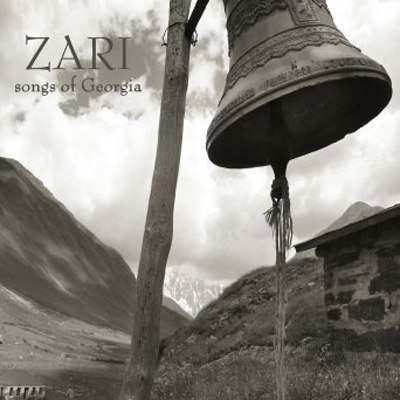
Their first CD, “ZARI: Songs of Georgia” includes earthy renderings of work songs, beautiful love songs, lullabies and moving liturgical pieces. Zari’s repertoire is extensive and they have performed in Georgia in front of esteemed guests such as Georgian President Mikheil Saakashvili, The Patriarch of the Orthodox Georgian Church and well-known master musician Anzor Erkomaishvili.

With the current political scene and North American influences making their way into Sakartvelo, Robins is moved by the continued reverence Georgians have for performing and interpreting their ethnic folk musics. “Georgian music is still one of the world’s great secrets.”  says Robins. Zari offers it to us beautifully, to delight our hearts and spirits.

Greyeyes Family Connections ~

(Composed in 2012: Toronto)
Over the past two years, we’ve become aware of the depths of our maternal Wyandot Ancestry. One of the most affirming aspects of this incredible gift, is how completely and easily I feel I have merged with this information and how relieved I am that my spirituality locks into the spiritual paradigm and worldview, so easily. It’s as if I have come home to something known, but not learned, something understood but accessible perhaps by blood and collective memory; moments of  dream consciousness perhaps revealed by a particular kind of creative spiritual openness…this deep connection.

As a young art student, gazing upward in Walker Court at The Art Gallery of Ontario my eyes would travel around the names of the original Ontario Indigenous peoples mounted under the crown moulding in an installation by Lothar Baumgarten, honouring their history: Nippissing, Ojibwe, Tionontati (Petun), Attawandaron (Neutral), Wendat (Huron) …Algonquin, and they would always come to rest on both HURON – those words felt, sounded and looked like words I knew and understood I cannot explai why but my eyes would well up with tears. Although this piece has been
challenged by Indigenous artist Robert Houle, I was unaware of the political issues with this work at the time.

Of course I knew of Lake Huron and that everything in Windsor and Michigan seemed to be named after the HURON Wyandotts, including the cemetery but I knew not why it filled me with such strange emotions, in fact I felt compelled to ride my bike down HURON street every day to go to school. I felt a stirring, as if my heart locked onto those words, though again, I knew not why.

One of my cousins, Margaret Greyeyes  {pictured left} was known for her good works and was a pillar of strength for the Ohio Wyandots, as they suffered eradication of their culture and the horrific Indian Removal. Although she converted, as many did to Christianity, I like to think that underneath the Christian wrap, was the indigenous reality hidden in plain sight  as was a common expression in those days…  I have already learned so much about my blood and Ancestors. Much later in my journey, I learned though my work with the Wendat Wyandot Women’s Advisory Council and Professor kathryn Magee Labelle about the detailed histories of some of our most beloved women Ancestors. Their tremendous strength and Motherwork maintained several communities across time and space.

In 2012 I made my first trip to Oklahoma to receive my clan name. Such peace and ‘connectedness’ are hard to describe ~  but after so many years of searching, I feel a great sense of ease.

Toronto 2012

Taǫmęˀšreˀ ižátsih
Hatiⁿgyáʔwiš ayeʔtarúʔtęʔ
Wandat ažáʔtuʔtę
tižamęh, tiawenhk, thank you!

Addendum 2026: In the last 16 years I have covered a lot of territory. I despair of Wyandot and Wendat alike challenged on identity issues and I encourage people to do more research so that they become aware of our tremendous history and our five communities across Turtle Island. Our people suffered a great deal but have remained strong and present on these lands. Carrying the blood of a few nationalities… I consider myself very gifted to have these incredible cultures as part of my genetic inheritance and have met so many wonderful cousins and family members along the way.  Peace. Toronto Feb 25, 2026.