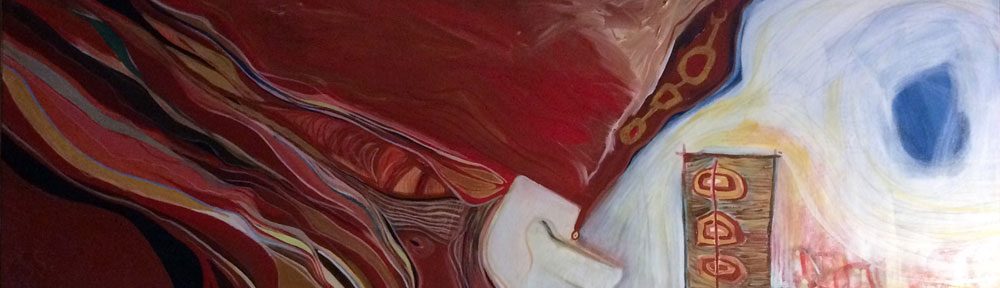

“AKIN is thrilled to welcome Wyandot multimedia artist and Tradition Keeper Catherine Tammaro (Taǫmęˀšreˀ) to our organization as our inaugural Indigenous Elder Artist in Residence – a relationship based on communication, creativity, awareness/visibility and relationship building between creative settler and Indigenous folk. This initiative will help AKIN work toward maintaining its treaty responsibilities with Indigenous Peoples per the Dish With One Spoon Wampum Belt Covenant, an agreement between allied nations to care for and share the resources in the Great Lakes Region.
Catherine will engage with studio members and our larger community remotely during COVID 19 era precautions, provide creative and spiritual support for Indigenous artists and collaborate with AKIN on initiatives prioritizing Indigenous artists and cultural producers. We understand that we have a lot of work to do in better supporting Indigenous folk, and making our spaces safe and enjoyable. This unique residency program is one step that we have worked together on for several months, and while excited, AKIN recognizes the work we still have ahead of us.
A special thank you to our friend and advisor Rania El Mugammar whose support has made this program possible.”
https://www.akincollective.com/blog/welcome-catherine-tammaro
I did enjoy my time as Elder in Residence at AKIN and I am currently enjoying my studio space at AKIN Queen………..I support AKIN and am very grateful to Rania El Mugammar for her wonderful support toward making this wonderful programme happen.

I first met “Canada’s Premiere Outsider Artist” Menno Krant in 1995 when he, I and several other self-titled “Outsiders” exhibited at Tableau Vivant Gallery on Queen West. We had formed a casual collective and placed ourselves apart from the mainstream gallery-elite in Toronto. Not hard, considering the group was composed of ‘folk’ or naïve and underground artists whose work spoke directly to social justice issues, some participants even questioning their identities as artists. Generating an electronic-based piece, distanced me from the Outsider realm of art making.
Legend has it that Menno at that time was living in his car and resting his canvasses on the trunk to paint; dipping his pieces in the lake and letting them dry on his car roof. Menno says it didn’t occur to him that he was even painting. He was primarily “passing time” and not in contact with any one in the art world. Through his association with folk art/antique dealer, Phillip Ross in Toronto his raw, gorgeous work was discovered by a New York Dealer and he became an art sensation.
Menno, rather reclusive, “invisible, a ghost” in his own words, is currently enjoying a new kind of celebrity. His works are being studied and written about in the form of a Doctoral Thesis by Mr. Peter A.L. McCormack, of London England, who suggests that Menno can no longer be classified as a ‘traditional’ Outsider Artist.
What makes “Outsider Art” truly ‘outside’? French wine merchant and occasional painter Jean Dubuffet, a champion of “L’Art Brut”, coined this term in 1948 to describe the art of the untrained, marginal or mentally disturbed. The term is often a “catch-all” phrase, miss-applied regardless of content and context, although Outsider Art definitions are changing and expanding. Cabbagetown’s rather anonymous shopping-cart installation artist is a fine example, leaving his beautiful, fugacious offerings tied to lampposts.
Outsider Artists, such as famed Scottie Wilson, a one time Toronto resident, or Aloise Corbaz, tend to make art obsessively and may generate thousands of pieces in their creative lives. Many suffer what is called “Horror Vacui” a tremendous fear of leaving empty space on the canvas. Typical of outsider art is a completely art-covered surface. Only since the 1920’s has L’Art Brut been given the merit it deserves as genuine avant-garde expression.
Although Menno’s repetitive imagery and high productivity are typical of outsider painters, Mr. McCormack, an art historian, places Menno as a kind of Modern Outsider. This means Menno’s work, because of its anthropological nature could be placed within the boundaries of Modern Art, in a sense, putting Outsider Art inside Modern Art.
Menno Blue; Menno’s latest exhibit, “ …explores themes of isolation, identity and attachment…” says curator Jodie James Elliot. The works; some 50 canvasses, were generated from the artist’s involvement with online Smurf collectors and “…examine issues of legitimacy and authenticity, gender politics, anxiety, mistrust and the collapse of empires…” Menno’s transition from outsider to authority within this virtual community provides intriguing information regarding this new body of work, which may be considered rather subversive, even in the Modern Art community.